
Resilience in the Wild: What Nature Teaches Us About Stress
- Sep 16, 2025
- 5 min read

Step into the wilderness and nothing is predictable. A trail can wind from sunlit ridgelines into shadowy valleys without warning. The air shifts, clouds gather, the temperature drops. Out here, there are no neat schedules or guarantees. Instead, there is only adaptation, awareness, and the willingness to keep moving.
What’s powerful is that these outdoor experiences don’t just stay on the trail; they can also change how we think. Metaphors from nature become a lens through which we can understand our lives, their stresses, and our resilience in the face of them. When we picture a steep climb as a difficult phase in our life, a river as the flow of demands, or a storm as a season of pressure, we’re no longer just reacting to stress. We’re seeing it differently, thinking about it differently, and giving ourselves new tools to work with.
At NewZeal Teams, we believe this is the gift of the wild: it shapes not just our actions in the moment, but our mindset for everything that follows. Stress management and resilience, so vital in the workplace, are writ large in the natural world. To walk through the wild is to walk through the same pressures, uncertainties, and recoveries that define modern work and leadership.
Here are some wilderness metaphors that resonate strongly with the everyday experience:
Stress Is Weather, Not The Climate
Imagine you're out on a hike, and suddenly, a storm rolls in. The wind picks up, the rain starts to pour, and the trail becomes slippery. It’s uncomfortable, maybe even a little scary. But you know it won’t last forever. The storm will pass, the clouds will clear, and the sun will shine again.
Stress at work is a lot like that. It can feel overwhelming in the moment, but it’s not permanent. It’s weather, not climate. By recognising this, we can approach stress with a sense of perspective; understanding that while the pressure may be high now, it’s temporary. And just like a storm, it will pass.

The River Of Demands
Picture yourself standing at the edge of a river. The current is strong, the water rushing past with force. You could try to fight it, but that would be exhausting and probably dangerous. Instead, you look for a way to work with the current, maybe finding a spot where the water is calmer, or using the flow to help you move forward.
In the workplace, the river represents the constant stream of demands, emails, meetings, deadlines. Trying to fight against this current can lead to burnout. But by learning to navigate it, by finding ways to work with the flow rather than against it, we can maintain our energy and focus.

Campsites And Recovery
After a long day of hiking, you set up camp. You cook a meal, sit around the fire, share stories, and rest. This time is essential, it recharges your body and mind, preparing you for the next day’s journey.
In our work lives, recovery is just as important. It’s easy to get caught up in the hustle, to keep pushing forward without taking a break. But without recovery, we lose our ability to perform at our best. Whether it’s taking a short walk, having a meaningful conversation, or simply stepping away from our desks, these moments of rest are crucial for maintaining resilience.

Growth At The Edge
The most challenging parts of a hike are often the most rewarding. The steep climb, the rocky path, the uncertain footing; these are the moments that test us, that push us beyond our comfort zones. And when we reach the top, the view is worth every step.
In our personal and professional lives, growth happens at the edge of our comfort zones. It’s in those moments of challenge, when we feel stretched and uncertain, that we learn the most. By embracing these moments, rather than avoiding them, we can build resilience and discover new strengths within ourselves.
The Forest’s Quiet Lessons
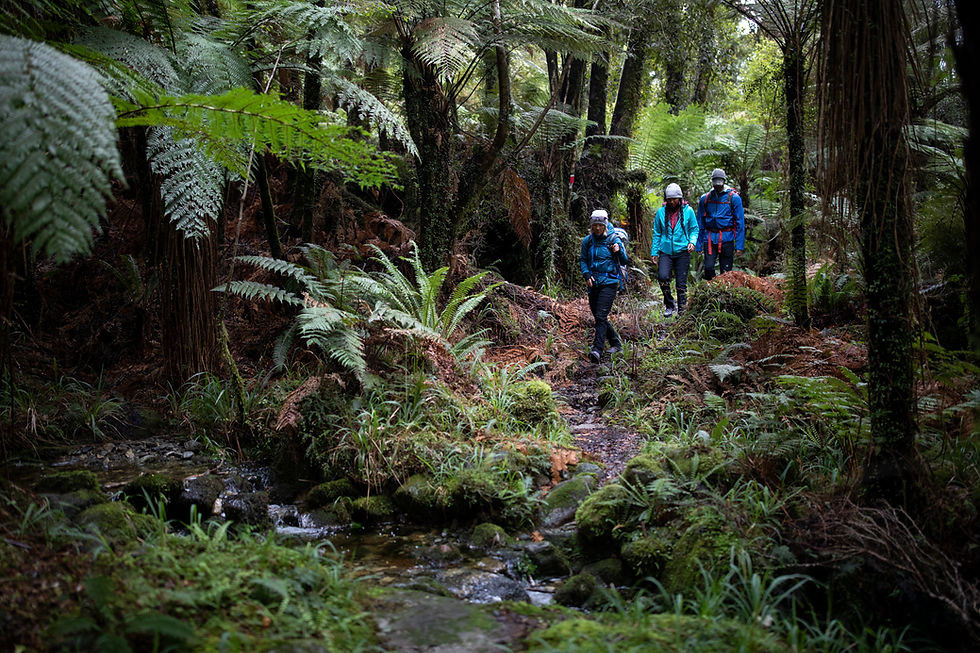
Sometimes, the most profound lessons come not from the peaks, but from the quiet of the forest. The steady growth of trees, the patience of nature, the cycles of renewal- these remind us that resilience isn’t just about pushing forward. It’s about being present, being grounded, and allowing ourselves to grow at our own pace.
In the workplace, this means recognising the value of patience, reflection, and steady progress. It’s about understanding that resilience isn’t a sprint; it’s a journey. And sometimes, the best way to move forward is to slow down and take a moment to breathe.
Thriving, Not Just Surviving
The wild doesn’t give us answers. What it offers is perspective. And in that perspective, stress becomes something we can navigate. Walking through the wild, you begin to see these patterns everywhere. The storm that passes. The river that can be crossed. The campsite that restores. The climb that stretches you. The forest that steadies you. And then you realise: resilience isn’t just an outdoor skill. It’s a mindset you can carry into every part of life and work.
Resilience isn’t just about getting through tough times. It’s about thriving. It’s about using challenges as opportunities for growth, about finding strength in adversity, and about emerging from difficult situations stronger and more capable.
Managing Stress- Nature As A Resilience Reset
One of the most powerful ways to manage stress is also one of the simplest: step outside. Nature doesn’t ask anything of us, and in that absence of demand lies its gift. The moment you leave the office or the meeting room and step into open air, your senses start to recalibrate. The mind slows, the breath deepens, and the body begins to let go of the weight it has been carrying.
Time in the outdoors acts as a natural reset. Whether it’s a short walk through native bush, the rhythm of boots on a mountain trail, or simply pausing beside a lake to watch the ripples move across the surface, these experiences interrupt the cycle of stress. They give us perspective. Problems that felt overwhelming shrink back to their true size, and what matters most becomes clearer.
Nature also reminds us of balance. Just as ecosystems thrive through diversity and rhythm, so too do people and teams. We are not built to operate at full tilt every hour of every day. We need the seasons of effort and the seasons of rest, the storms and the calms, the climbs and the campsites. Out in the wild, this truth becomes impossible to ignore.
Getting outdoors doesn’t have to mean an expedition. It can be as small as seeking out a green space at lunchtime or as big as a multi-day trek. The act itself is what matters: the conscious choice to pause, to look up, and to reconnect. In doing so, we not only manage stress more effectively, but we also cultivate resilience, the kind that stays with us when we return to our daily lives.
Get in touch to talk to us about our team retreats- where adventure and the outdoors remind us of our resilience


Comments